DRIVE brings Horn of Africa experience to UNGA food security discussions
Somali representatives shared how drought insurance and livestock investment can help protect pastoral livelihoods and improve market access.
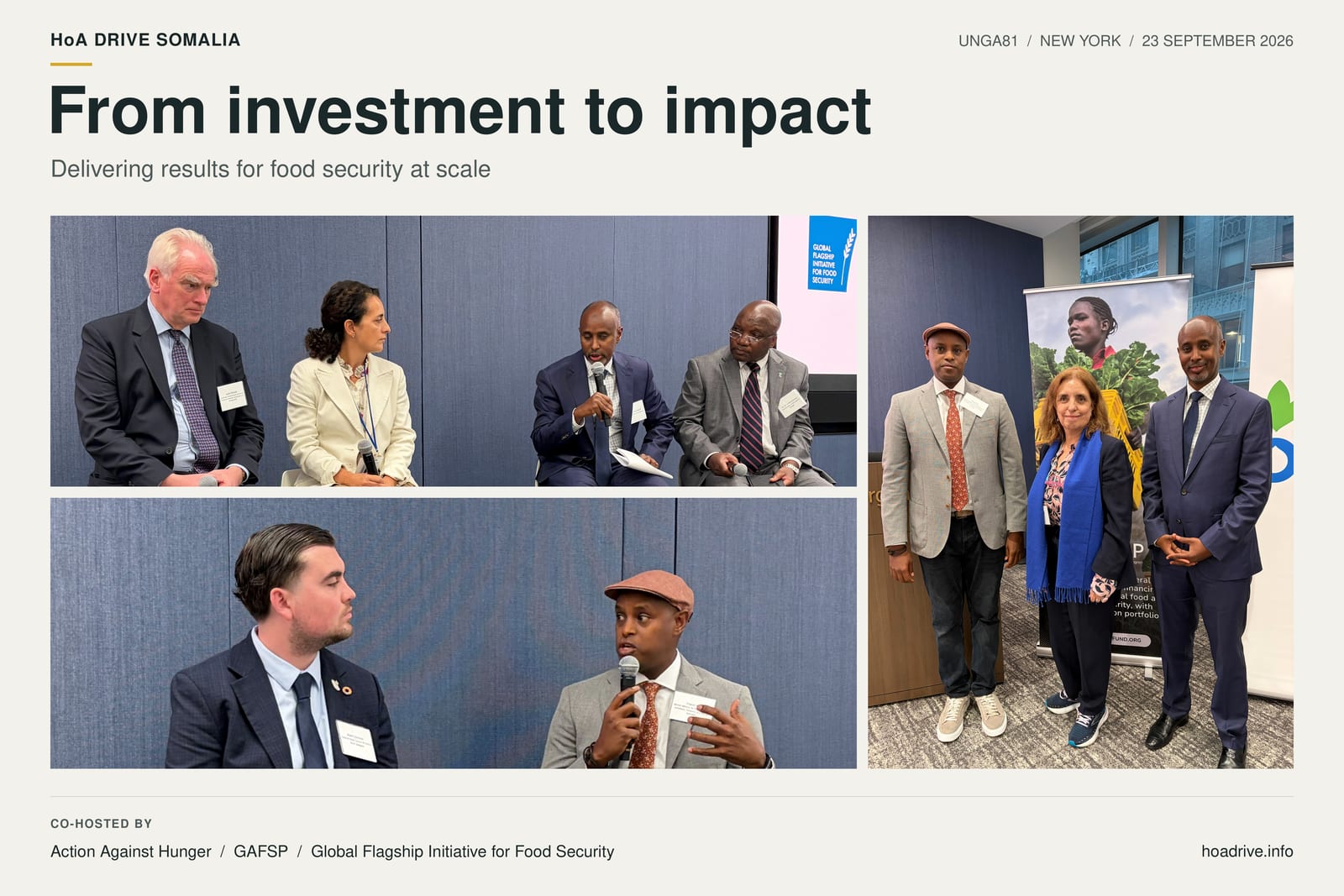
HoA DRIVE shared its experience in protecting pastoralists from drought and strengthening livestock markets at a food security roundtable in New York on September 23, held alongside the 81st United Nations General Assembly.
The event, “From Investment to Impact: Delivering Results for Food Security at Scale,” was co-hosted by Action Against Hunger USA, the Global Agriculture and Food Security Program (GAFSP), and the Global Flagship Initiative for Food Security. DRIVE was represented in both panels, bringing government and insurance-sector perspectives from Somalia to the discussion.
The World Bank-financed regional project works across Djibouti, Ethiopia, Kenya and Somalia. It combines financial services for pastoralists with support for livestock businesses and trade, linking protection against drought with opportunities to earn more from livestock.
Acting before losses deepen
Abdirahman Shariff, ZEP-RE’s Somalia Country Manager for DRIVE, joined the panel “Financing, Risk, and Delivery at Scale.” He discussed how risk financing can support earlier action when climate shocks threaten pastoral livelihoods.
DRIVE’s index-based livestock insurance uses satellite data to monitor pasture conditions. Payouts are triggered when the index crosses an agreed drought threshold, helping pastoralists buy feed and protect their core breeding animals. Insurance is offered alongside savings and digital accounts, giving households ways to manage both smaller shocks and severe drought.
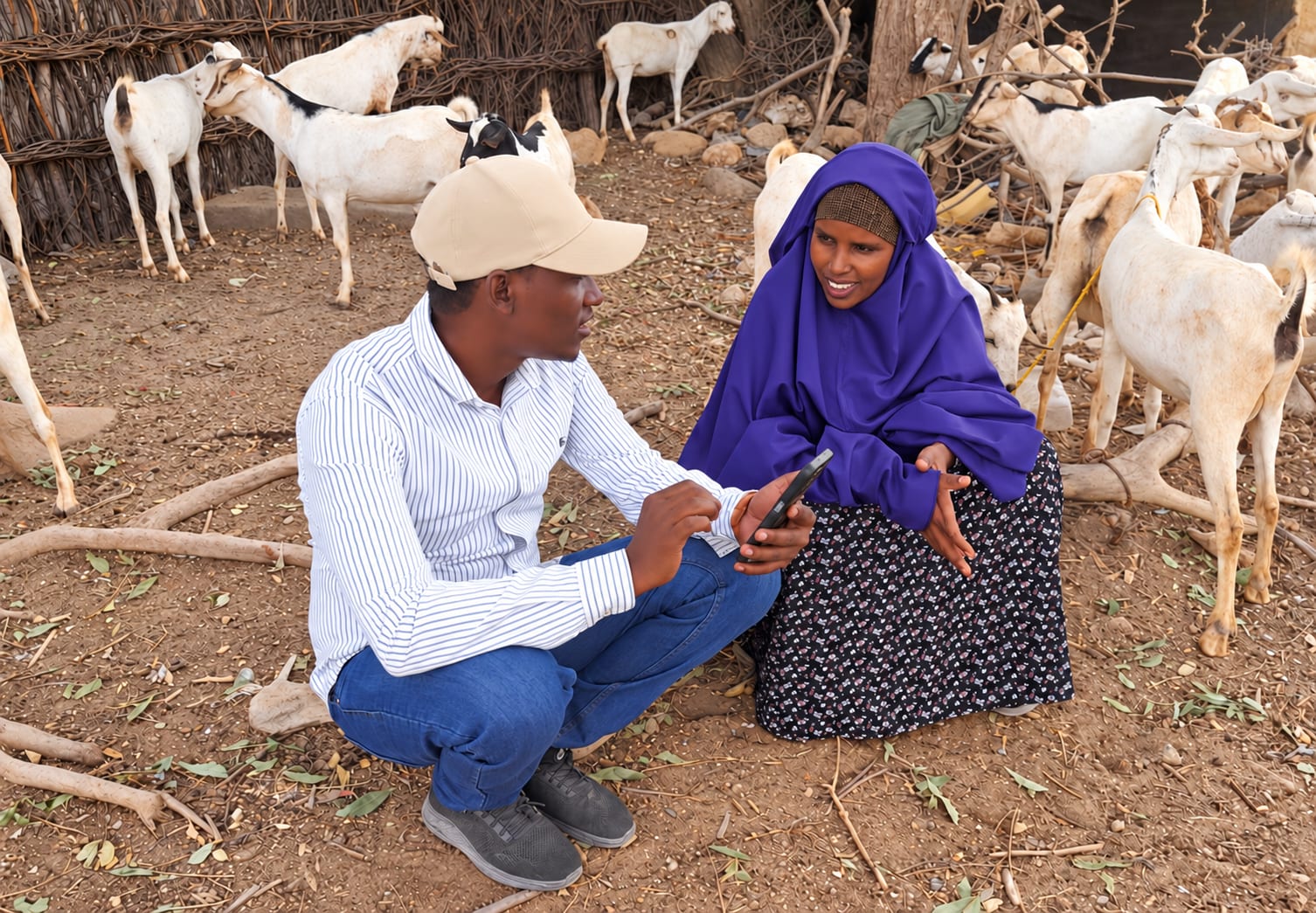
In Somalia, the latest round of drought Takaful payouts is under way following poor and uneven rainfall during the April–June 2026 season. Payments reach pastoralists through mobile wallets, helping families buy water and fodder as drought puts pressure on their livelihoods.
Getting finance to families while they can still protect their animals is central to this approach. For pastoral households, keeping livestock alive also protects a source of food, income and savings.
Linking protection with investment
Feysal Ali, Senior Advisor to Somalia’s Ministry of Livestock, Forestry and Range, spoke in the panel “From Evidence and Forecast to Action and Scale.” He emphasized the importance of turning evidence and early warnings into action, and described how DRIVE combines financial protection with investments in livestock value chains and trade.
He also highlighted the Livestock Value Chain Fund’s role in facilitating private investment. In Somalia, the fund is managed by Gargaara and supports financing for businesses across the livestock sector.
DRIVE’s work on traceability, standards and trade facilitation complements this financing. These efforts aim to help businesses meet buyers’ requirements and reach markets more reliably, creating better conditions for investment.
The roundtable formed part of DRIVE’s participation in UNGA side events on climate resilience, food security and investment. The two panels connected the practical work of delivering insurance with efforts to strengthen the wider livestock economy, offering lessons for countries seeking to protect pastoral livelihoods and expand opportunities for the businesses that depend on them.